 Business License

Test method for Ruhr cone joint comprehensive tester under ISO80369 standard
Test method for Ruhr cone joint comprehensive tester under ISO80369 standard
1、 Standard Overview
ISO80369-20 is the general testing principle for small caliber Ruhr cone connectors in the international medical device field. It is the basic universal standard for testing all infusion, injection, and interventional Ruhr connectors in the ISO80369 series, replacing the traditional old ISO594 series standards. It is currently the most globally unified and recognized safety compliance testing basis for Ruhr connectors. The domestic equivalent corresponding standards are GB/T1962.1-2015, GB/T1962.2, YY/T0916 series, which are widely applicable to the quality inspection of medical devices and domestic Class II/III medical consumables. The core purpose of this standard is to address safety hazards such as mismatched connections, loose separation, air leakage, torque failure, stress cracking, overload damage, etc. of clinical Ruhr connectors. It unifies the mechanical performance, sealing performance, durability performance test methods and judgment thresholds of locking and non locking 6% Ruhr cone connectors, and adapts to a full range of Ruhr connector products including infusion sets, syringes, indwelling needles, medical catheters, and blood transfusion equipment.
2、 Device Core Definition and Application Scenarios
Medical risks such as detachment and leakage of connectors, intake plugs, and connection failures in specialized core equipment for hairstyle testing, third-party testing agency certification, and customs import and export compliance sampling.
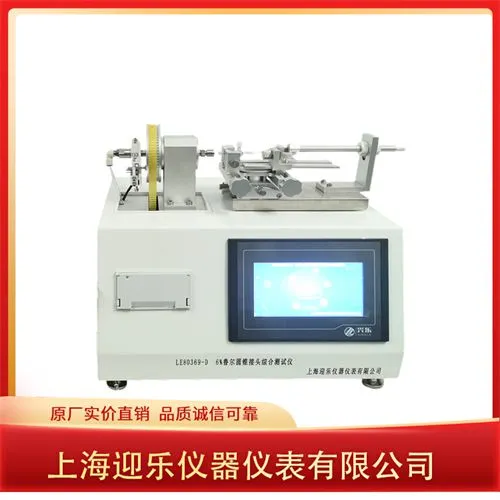
The 1SO80369-20 Luer Yuan Wei Joint Comprehensive Tester is an integrated multifunctional testing device developed specifically for adapting to the general principles of 1SO80369-20 and the IS080369-7 infusion specific standard. It differs from a single device
Leakage tester, which can complete the full project testing of Ruhr joint sealing, mechanics, durability, and assembly compatibility in one stop, without the need for multiple equipment disassembly tests. It is used for factory inspection and research of finished products in medical device enterprises
The equipment can accurately simulate real working conditions such as clinical assembly, infusion pressurization, negative pressure drainage, pulling and vibration, and rotation and disassembly, comprehensively verifying the safety and interchangeability of the Luer connector
3、 Standard specifies core testing items
According to the ISO80369-20 specification, the equipment needs to cover the full project testing of three dimensions: sealing, mechanical mechanics, and durability stability, and fully cover the mandatory testing items of the standard:
1. Bidirectional seal leakage test
Used to verify the sealing reliability of the Ruhr connector after assembly, and to eliminate potential leakage and air intake hazards:
Positive pressure liquid leakage test: Apply standard hydraulic pressure to detect liquid leakage at the joint connection, simulate clinical pressurized infusion conditions;
Negative pressure air leakage test: Extract standard negative pressure to stabilize the pressure, detect the amount of air infiltration into the chamber, and prevent the risk of air embolism during negative pressure drainage.
2. Mechanical performance testing
Verify the connection strength and locking reliability of the Ruhr connector to prevent loosening and breakage during use:
Axial Separation Force Test: Test the axial tensile pulling ability of non locking Luer connectors to determine their anti detachment performance for daily use;
Unscrew torque test: for locking the Luer connector, test the standard assembly's unscrewing torque to verify the locking stability and disassembly rationality;
Anti overload and anti slip wire testing: Simulate excessive force assembly and misoperation conditions to detect deformation, slippage, and damage of conical surfaces and threads.
3. Durability and compatibility performance testing
Stress cracking test: Continuously maintain pressure under standard operating conditions, observe whether the plastic matrix of the joint cracks, becomes brittle, or deforms, and verify long-term stability during use;
Easy assembly and interchangeability testing: Testing the smoothness and coaxiality of 6% Ruhr connectors from different batches and manufacturers to ensure industry wide interchangeability.
4、 Core requirements for qualification assessment
According to the ISO80369-20 standard, all testing items of the product must meet the standards in order to determine that the performance of the Ruhr connector is qualified:
The positive and negative pressure sealing test showed no leakage or intake, and the pressure remained stable without any abnormal attenuation;
The separation force and torque values fall within the standard specified range, with no issues of looseness, tightness, or failure;
After overload and sliding wire testing, the structure is intact without thread wear, cone deformation, or cracking damage;
After stress testing, there are no cracks or deformations, and there is no degradation in sealing and mechanical properties;
The joint assembly is smooth and the alignment is precise, meeting the requirements of cross brand interchangeability and compatibility.
5、 Core technology configuration of equipment (standard adaptation requirements)
A comprehensive tester that meets ISO80369-20 compliance testing must have the ability to perform multi parameter high-precision integrated testing. The core configuration is as follows:
Integrated pressure, tension, and torque multi-sensor modules, high-precision acquisition: pressure accuracy ± 0.1kPa, torque accuracy ± 0.01Nm, tension accuracy ± 0.1N;
Support free setting of pressure, force value, torque, and holding time, matching standard test conditions;
Automatic timing, elimination of pressure loss during the testing process, ensuring data stability;
Equipped with standard 6% Ruhr connector special tooling to ensure assembly coaxiality, no secondary leakage and testing interference;
Support real-time data collection, curve display, data storage, and automatic generation of compliance testing reports. The data can be traced and archived to meet audit and certification requirements.
Recently Posted
-
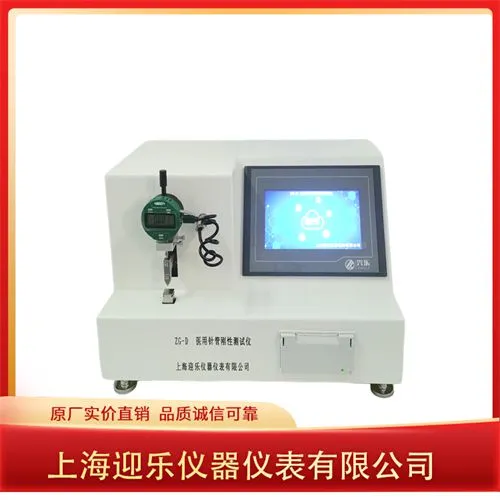
Introduction to injection needle rigidity tester (adapted to ISO9626 standard)
November 7, 2026I. Standard DescriptionThe syringe rigidity tester follows both ISO 9626-2016, Annex B "Requirements and Test Methods for Sta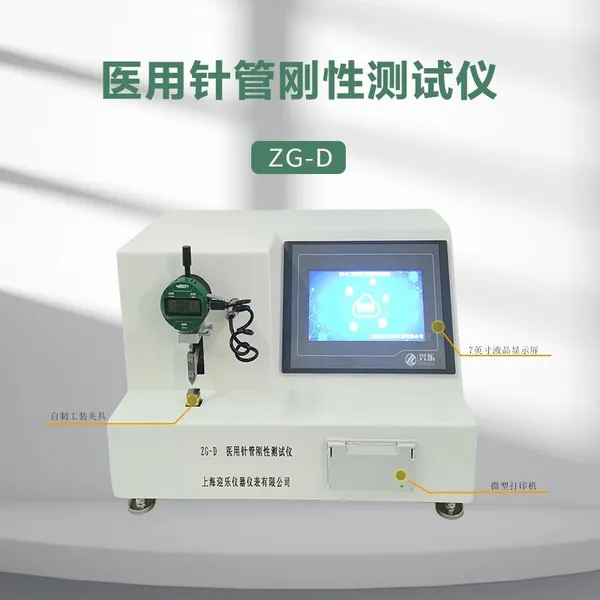 Read More
-
Injection Needle Tester - Wikipedia
September 30, 2026The medical injection needle tester is a common testing device for medical devices. It is mainly used to inspect the quality and p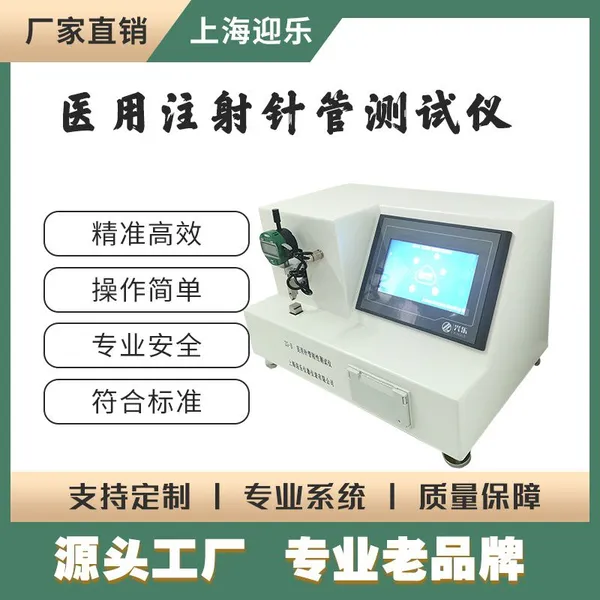 Read More
-
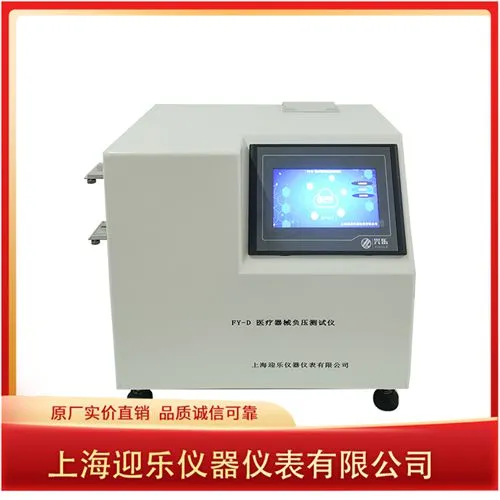
Medical device negative pressure tester
May 22, 2026Product Definition: Medical device vacuum test instrument is a professional equipment used to detect leakage at the piston or seal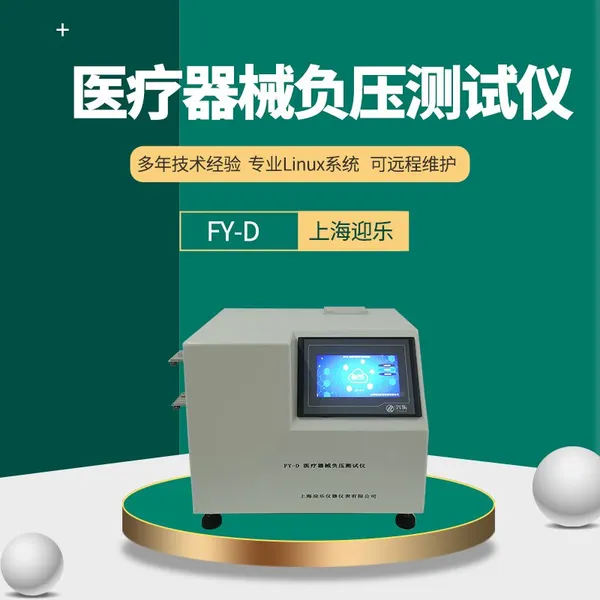 Read More
-
Acupuncture Needle Tip Strength and Sharpness Testing Guide
May 14, 2026Acupuncture Needle Tip Strength and Sharpness Testing GuideProvided by Shanghai Yingle Instrument Co., Ltd.1. Scope of Application Read More

Contact Us
Recommended Products
-
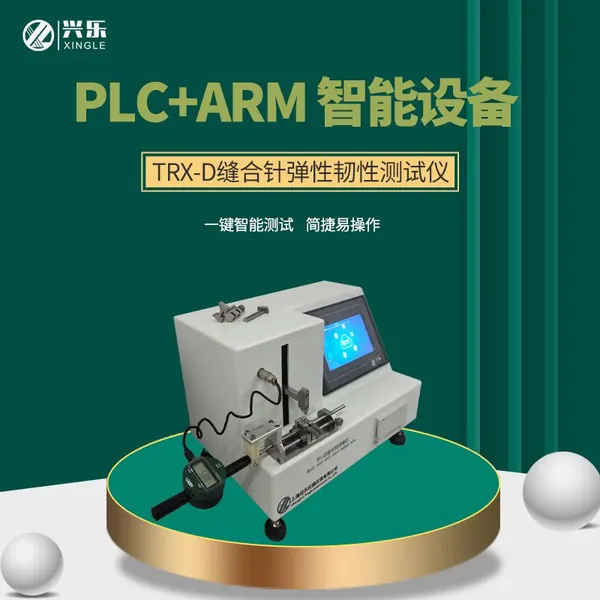
 Medical Suture Needle Elasticity and Toughness TesterUS$ 3000MOQ: 1 Piece
-
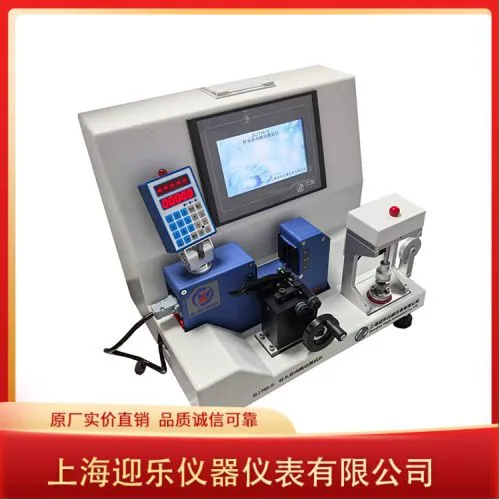
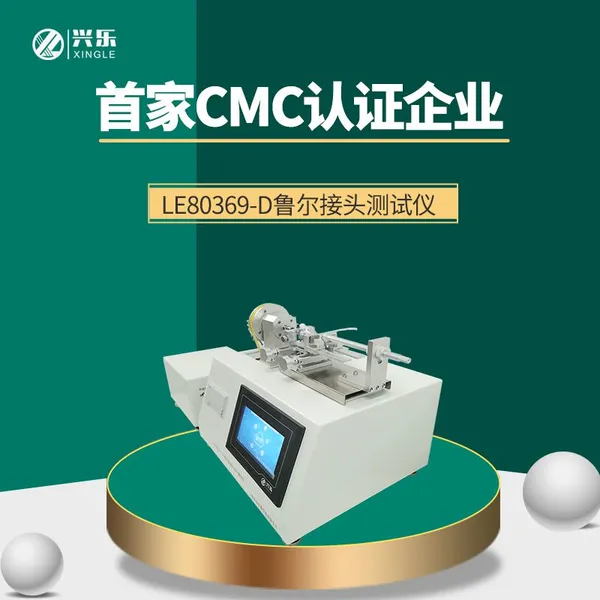
ISO80369Luer Conical Connector Comprehensive TesterUS$ 7000MOQ: 1 Piece
-
ISO7886-1 Medical Injector Sealing Positive Pressure Tester for Disposable Syringe TightnessNegotiableMOQ: 1 Combo
-
ISO9626Medical Needle Rigidity TesterUS$ 30000 - 48000MOQ: 1 Bag
-
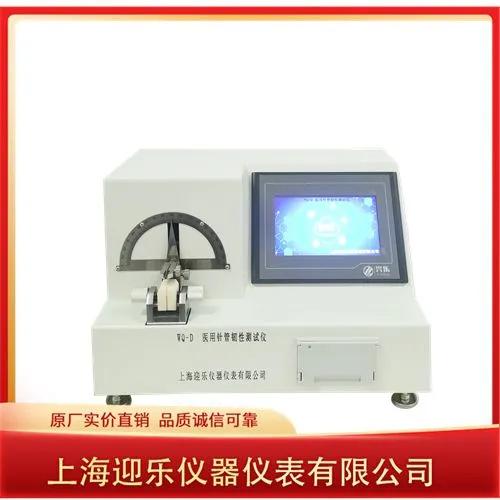
ISO9626Medical Syringe (needle) Toughness TesterNegotiableMOQ: 1 Piece

-
ISO7864 Standard Medical Needle Penetration Force TesterUS$ 3000 - 4800MOQ: 1 Combo
-
Medical Syringe Sliding Performance TesterUS$ 3000 - 4800MOQ: 1 Combo
-
Medical Needle Tube Firmness Tester/medical Needle Tube Separation Force TesterUS$ 3000 - 4800MOQ: 1 Combo
-
Shanghai Yingle Medical Needle Bend Toughness TesterUS$ 30000 - 48000MOQ: 1 Combo
-
Medical Syringe Barrel Positive Pressure TesterNegotiableMOQ: 1 Combo


-
Medical Syringe (needle) Toughness TesterNegotiableMOQ: 1 Piece
-
Medical Needle Tip Puncture Force Testing InstrumentNegotiableMOQ: 1 Piece
-
Best Penetrability Testing Machine For Syringe Needle Penetrate RubberUS$ 3000 - 4800MOQ: 1 Combo
-
Needle Point and Artificial Skin Puncture Force TesterNegotiableMOQ: 1 Piece
-
Air Leakage Tester for Positive Pressure Subjected Infusion SetsUS$ 3000 - 4800MOQ: 1 Piece

-
Medical Needle Rigidity TesterUS$ 30000 - 48000MOQ: 1 Bag
-
Patient-End Needle Radial Runout TesterUS$ 30000 - 48000MOQ: 1 Set
-
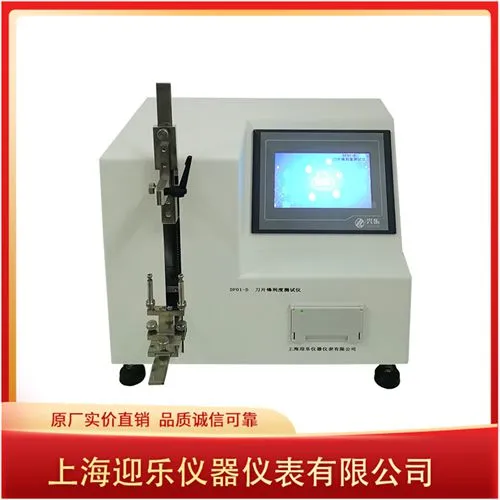
Blade Sharpness TesterUS$ 30000 - 48000MOQ: 1 Set
-
Medical Needle Tip Strength Puncture Force Tester ManufacturerUS$ 3000MOQ: 1 Piece
-
Medical Syringe Testing Equipment ManufacturerUS$ 3000 - 4800MOQ: 1 Combo